April might be one of the best months to be in Austin.

The weather is usually warm without reaching the unbearable summer heat, patios are packed, parks are full, festival season is in full swing and Austinites have plenty of excuses to get outside. After the madness of SXSW in March, April feels like the city gets a chance to breathe again—but there is still plenty happening.

And two of Austin’s most recognizable traditions are about to take over the city.

One involves hundreds of colorful kites filling the sky.

The other involves a giant party celebrating the birthday of a fictional donkey.

Only in Austin.

The first big event on the April calendar is the ABC Kite Fest, returning to Zilker Park on April 2.

The event has been an Austin tradition for decades, bringing families, kite enthusiasts and spectators to the park for a massive celebration built around one very simple idea: fly a kite.

That simplicity is part of the appeal.

You don’t need a concert ticket.

You don’t need a fancy outfit.

You don’t need a reservation.

You don’t even need to be particularly good at flying a kite.

You just need to get to Zilker Park, look up and enjoy the spectacle.

And it can be spectacular.

When the wind cooperates, the sky above the park fills with enormous colorful kites, unusual shapes and elaborate designs. Some are traditional diamond-shaped kites, while others are massive creations that look more like floating sculptures.

For families, it is one of the easiest Austin events to recommend because kids can actually participate instead of simply watching something happen.

Bring a kite.

Bring a blanket.

Bring snacks.

Find a spot in the grass.

And spend the afternoon outside.

The event also includes food, entertainment and competitions, turning what sounds like a simple kite-flying afternoon into a full spring festival.

For anyone new to Austin, the Kite Fest is also a great introduction to the city’s outdoor culture.

Austin loves its parks.

It loves its festivals.

It loves being outside.

And it especially loves events that don’t require people to spend a lot of money.

That’s why the Kite Fest has remained popular.

It feels like an old-fashioned community event in a city that is changing incredibly quickly.

You can look around Zilker Park and see families, longtime Austinites, young professionals, tourists and kids all doing essentially the same thing.

Looking up.

But the Kite Fest isn’t the only April tradition that feels uniquely Austin.

A few weeks later, the city gets considerably stranger.

Eeyore’s Birthday Party returns to Pease Park on April 29.

If you’ve never been, there really isn’t an easy way to explain Eeyore’s Birthday Party to someone who has never experienced it.

Yes, it is officially a birthday party.

Yes, the guest of honor is a donkey from Winnie-the-Pooh.

And yes, tens of thousands of people can show up.

But it isn’t a children’s birthday party.

It is one of Austin’s most unusual annual celebrations, featuring costumes, drums, live music, dancing, food, drinks and an enormous collection of people dressed in ways that are difficult to explain outside of Austin.

The tradition dates back to the 1960s, when University of Texas students began celebrating Eeyore’s birthday.

It eventually grew into one of the city’s signature counterculture events.

And while Austin has changed dramatically since the first party, Eeyore’s Birthday has managed to retain its unusual personality.

That’s increasingly rare.

A lot of Austin’s older traditions have either disappeared or changed beyond recognition as the city has grown.

Eeyore’s Birthday is different.

It remains intentionally strange.

There is no corporate festival branding trying to make it feel polished.

There isn’t a carefully curated Instagram aesthetic.

It’s messy.

It’s colorful.

It’s loud.

And that’s exactly why people love it.

The 2023 party is scheduled for Pease Park on April 29, with the celebration returning after the pandemic-era disruptions that changed the event in previous years.

For longtime Austinites, that makes this year’s party especially significant.

It’s another opportunity for one of the city’s oldest traditions to bring people together in person.

And if you’re planning to attend, prepare accordingly.

Wear something you don’t mind getting dirty.

Bring water.

Wear comfortable shoes.

Don’t expect to spend the afternoon looking sophisticated.

The people around you probably won’t be either.

That’s part of the fun.

April also means that Austin’s patio season is officially underway.

This is the month when restaurants and bars really begin taking advantage of their outdoor spaces.

The weather is warm enough to sit outside but usually hasn’t reached the point where you’re questioning your life choices after ten minutes in the sun.

That makes April one of the best months to explore Austin’s bar scene.

Instead of going directly downtown, try spending an afternoon exploring one of the city’s neighborhoods.

East Austin is an obvious choice.

The area continues to develop new restaurants and bars, while longtime neighborhood spots remain part of the scene.

You can start with lunch, walk around, stop for a drink, find live music and finish with dinner.

South Congress is another good option.

The neighborhood has become one of Austin’s most recognizable destinations, but it remains especially enjoyable in spring when people can walk between restaurants, shops and bars without dealing with the brutal summer heat.

And then there is Rainey Street.

By April, the outdoor patios are in full swing.

The historic houses converted into bars make the area unlike almost anywhere else in the city, and the warm spring evenings make it an easy place to spend several hours.

But don’t limit yourself to the obvious entertainment districts.

One of the best things about April in Austin is that neighborhood bars become destinations.

You don’t necessarily need a giant event.

Sometimes the best Saturday is finding a patio, ordering a cold beer and spending three hours talking with friends.

That’s particularly true after SXSW.

March can be overwhelming.

April is when you can slow down and actually enjoy the city.

Food is another reason to love the month.

Spring brings more farmers markets, outdoor food events and seasonal menus.

Austin’s food-truck scene becomes especially enjoyable in April because you can sit outside without sweating through your shirt.

Grab tacos.

Get barbecue.

Try a burger.

Find a food truck you’ve never visited.

And eat outside.

That’s the April Austin experience.

The city’s breweries are also worth watching.

April is a great month for brewery patios and outdoor events, particularly on weekends when people are looking for something less chaotic than downtown.

A brewery can be the perfect middle ground between a restaurant and a bar.

You can bring friends.

Order food.

Try several beers.

Sit outside.

And often bring your dog.

Austin’s dog-friendly culture also becomes much more visible in April.

Patios fill with dogs.

Parks fill with dogs.

Trails fill with dogs.

And at some point, somebody will probably bring a dog to an event where everyone else is dressed in a costume.

That is Austin.

Music is still everywhere, of course.

After SXSW, the city’s live-music calendar doesn’t suddenly disappear.

If anything, April is a good month to focus on local shows instead of major festival performances.

Check the smaller venues.

Look at Red River.

Explore East Austin.

Find a neighborhood show.

The city’s smaller music rooms are where you often discover artists before they become major festival acts.

And because the weather is better, some outdoor venues begin becoming much more active.

April also starts the countdown toward the enormous spring and summer events that dominate Austin later in the year.

That means this is a good month to start paying attention to what’s coming.

The city is entering its busy season.

More visitors are arriving.

Restaurants are opening new patios.

Bars are announcing summer events.

And Austin’s event calendar begins filling rapidly.

But if you’re looking for something to do right now, the two events to put at the top of your calendar are simple.

Kite Fest.

And Eeyore’s Birthday Party.

They couldn’t be more different.

One is a family-friendly afternoon in Zilker Park.

The other is one of the strangest parties in Austin.

But they have something important in common.

Neither one feels like it could happen anywhere else.

That’s what makes these events special.

Austin has plenty of large festivals that could happen in any major American city.

But watching hundreds of kites fill the sky over Zilker Park?

That’s Austin.

Walking into Pease Park and seeing thousands of people celebrating the birthday of Eeyore?

That’s Austin too.

And in a city that is changing as quickly as Austin, those traditions matter.

They remind people that the city existed before the newest apartment tower, before the newest restaurant opening and before every bar had an Instagram account.

They’re part of the city’s personality.

So if you’re looking for something to do in April, don’t overthink it.

Buy a kite.

Head to Zilker.

Spend an afternoon outside.

Then, later in the month, put together your strangest outfit, grab some friends and head to Pease Park.

Between those two events, you’ll experience two completely different versions of Austin.

One is colorful, family-friendly and floating above the park.

The other is loud, weird, unpredictable and completely Austin.

And that’s exactly why April might be the city’s best month.

The weather is right.

The patios are open.

The food is good.

The music is everywhere.

And Austin is still weird enough to throw a birthday party for a donkey.

Welcome to April in Austin.

Bring a kite.

Bring a costume.

And leave your expectations at home.

Austin didn’t have to wait until spring for another massive event after ACL. By November 2021, the city was still buzzing from one of the biggest weekends on its annual calendar: Formula 1’s United States Grand Prix at Circuit of The Americas.

The race had taken place in October, but its impact was still being felt across Austin as November began. The 2021 United States Grand Prix had drawn an enormous crowd to COTA, with more than 140,000 spectators attending on race day and a three-day attendance of more than 400,000. The numbers demonstrated just how important Formula 1 had become to Austin’s tourism, restaurant and nightlife industries.

But November wasn’t simply the month after a race.

It was the month Austin realized Formula 1 had become part of its identity.

For years, Austin had built its reputation around music, food, bars and festivals. Formula 1 added something different: an international sporting event capable of bringing visitors from around the world into the city for an entire weekend.

And those visitors didn’t stay at the racetrack.

They stayed downtown.

They ate at Austin restaurants.

They visited bars.

They went shopping.

They booked hotels.

They rented cars.

They explored neighborhoods.

They turned the entire city into part of the Grand Prix experience.

That was one of the reasons the 2021 race was so significant.

COTA wasn’t simply hosting a sporting event.

Austin was hosting Formula 1.

The distinction mattered.

During race weekend, downtown Austin became a second venue. Hotels and restaurants prepared for an influx of visitors, while bars and entertainment businesses benefited from customers looking for something to do after spending the day at the track.

The city was already accustomed to huge crowds from SXSW and ACL, but Formula 1 brought a different demographic and a different kind of energy.

There were international fans wearing team colors.

There were people carrying Ferrari and McLaren merchandise.

There were groups traveling specifically for the race.

There were longtime Austinites who had never paid much attention to Formula 1 suddenly talking about racing.

And there were restaurants and bars that realized the event could become one of their biggest weekends of the year.

The food scene was particularly important.

Austin had spent decades building a reputation as a food destination, and Formula 1 gave that reputation a global audience.

Visitors weren’t going to leave Austin without trying barbecue.

They wanted tacos.

They wanted margaritas.

They wanted craft beer.

They wanted breakfast tacos.

They wanted the restaurants locals had been telling them about.

And they wanted to experience the city’s nightlife.

Formula 1 essentially created a massive temporary tourism campaign for Austin’s food scene.

The race also had an unusually strong connection to the city’s celebrity culture.

Formula 1’s growing popularity in the United States was bringing celebrities, athletes and entertainers into Austin. The 2021 Grand Prix became a place where the worlds of sports, music and entertainment overlapped.

That was especially fitting for Austin.

This was already a city where musicians performed at restaurants, chefs appeared at festivals and celebrities could end up sitting at the table next to you.

Formula 1 simply added another layer.

The result was an Austin weekend where you could spend the afternoon watching racing and the evening listening to live music.

You could eat barbecue for lunch, visit COTA, return downtown and spend the night at a bar.

You could spend Sunday watching one of the world’s most prestigious motorsports series and Monday morning eating breakfast tacos.

Formula 1 fit Austin surprisingly well.

The city had the infrastructure for large events, the restaurant scene to feed visitors and the nightlife to keep them entertained after the race.

It also had something that many cities hosting major sporting events don’t have: an established culture of entertainment.

Austin knows how to throw a party.

And Formula 1 gave it another excuse.

The race’s success also reinforced COTA’s position as one of the most important event venues in Texas.

The facility wasn’t just a racetrack. It had become a major concert and entertainment destination as well, hosting large performances and other events throughout the year.

That meant the Formula 1 weekend was part of a larger transformation in Austin’s event landscape.

The city was increasingly capable of hosting huge events that combined sports, music, food and entertainment.

That was important because Austin’s growth was changing the type of events the city could attract.

For decades, Austin’s biggest cultural export had been music.

Now it had music plus food plus technology plus sports plus nightlife.

Formula 1 fit directly into that broader evolution.

And there was another reason the 2021 race mattered: it showed just how powerful the Austin tourism machine could be when all of those industries worked together.

Hotels benefited from visitors.

Restaurants benefited from hotel guests.

Bars benefited from restaurant customers.

Transportation companies benefited from everybody.

Local retailers benefited from tourists.

Musicians benefited from the increased demand for entertainment.

The event became a citywide economic engine.

That was particularly important for Austin’s hospitality industry, which had endured an extraordinarily difficult 2020.

The return of major events such as ACL and Formula 1 demonstrated that the city could once again generate the enormous bursts of tourism that had helped restaurants, bars and entertainment businesses thrive before the pandemic.

But November wasn’t only about Formula 1.

The month also marked the beginning of Austin’s holiday season, and the city’s restaurants and bars were preparing for one of the busiest times of the year.

Thanksgiving brought families back together, while restaurants began promoting holiday dinners, cocktails and special events.

Austin’s breweries and bars were also entering the holiday season with special releases and events, while restaurants increasingly shifted menus toward the fall and winter flavors that accompany the holidays.

The city’s food calendar was becoming packed again.

That was an important contrast with the previous year.

November 2020 had been a much quieter holiday season, with many businesses still operating under significant restrictions and uncertainty.

November 2021 felt different.

People were making reservations.

Restaurants were advertising events.

Bars were promoting holiday parties.

Businesses were preparing for larger crowds.

The calendar was full.

Austin’s social life was becoming busy enough that people once again had to decide where they wanted to go instead of simply asking whether anything was open.

That was perhaps the clearest measure of the city’s recovery.

And the city’s bar scene was particularly vibrant.

East Sixth Street remained one of Austin’s best-known nightlife districts, while Rainey Street continued developing into a major destination of its own. Downtown cocktail bars, breweries and restaurants were attracting visitors who had come into town for everything from Formula 1 to Thanksgiving trips.

The city’s nightlife was becoming increasingly diverse.

You could spend the evening at a traditional Austin dive bar.

You could visit a high-end cocktail lounge.

You could drink beer at a brewery.

You could find live music.

You could visit a rooftop.

You could end the night at a taco truck.

That combination was becoming one of Austin’s defining characteristics.

Formula 1 simply amplified it.

For visitors arriving from outside Texas, Austin wasn’t just the place where the race happened.

It was the place they went after the race.

And that distinction was extremely valuable.

COTA could provide the track.

Austin provided the rest.

The restaurants.

The bars.

The music.

The nightlife.

The culture.

The food.

The personality.

That combination was what made the United States Grand Prix so successful in Austin.

By November, the race had already become one of the city’s major annual events, and the 2021 attendance numbers made it clear that it wasn’t going anywhere.

Formula 1 had found an audience in Texas.

More importantly, Austin had found another event capable of putting the city on a global stage.

The city’s traditional identity wasn’t disappearing.

It was expanding.

Austin could still be the Live Music Capital.

It could still be a food city.

It could still be a bar city.

It could still be the home of SXSW and ACL.

And now it could also be one of the most important Formula 1 destinations in the United States.

That combination made November 2021 feel like an important moment in Austin’s evolution.

The city was no longer defined by one thing.

It was becoming a destination where major events of completely different kinds could coexist.

Music fans came for ACL.

Racing fans came for Formula 1.

Food lovers came for barbecue and tacos.

Nightlife visitors came for the bars.

Tourists came for all of it.

And Austin was more than happy to entertain them.

By the end of the month, the city was already looking toward the holiday season and the next year’s event calendar.

But the lesson from Formula 1 was clear.

Austin had become a city capable of turning a major event into an entire weekend experience.

The race might happen at COTA.

But the party happened everywhere.

And in 2021, that was becoming one of the most valuable things Austin had to offer.

Fuckkkkk.

Austin has hot summers.

Austin has thunderstorms.

Austin has the occasional cold front.

What Austin isn’t supposed to have is a week where the entire city seems to stop working because of ice and snow.

Then February 2021 happened.

Winter Storm Uri turned Austin into a city that many residents barely recognized.

Roads became dangerous.

Power disappeared.

Water systems failed.

Businesses closed.

Restaurants that had already spent almost a year fighting COVID suddenly faced another disaster.

For Austin’s food scene, it was a brutal combination.

Restaurants were already operating under difficult circumstances.

Then the freeze arrived.

Food supplies became difficult to obtain.

Employees couldn’t necessarily get to work.

Customers couldn’t necessarily leave home.

Power outages affected refrigeration and cooking.

And many restaurants that had managed to survive the pandemic suddenly had another enormous problem.

The storm also changed the way Austinites thought about basic necessities.

Food wasn’t simply something to enjoy.

It became something communities had to organize around.

Restaurants, food trucks, volunteers and neighborhood groups helped provide meals where possible.

The same city that had spent months finding creative ways to survive COVID was suddenly trying to feed people during a historic winter disaster.

The February freeze was also a reminder of how dependent Austin had become on infrastructure that residents normally took for granted.

A restaurant can have a great chef and a great menu.

But if the electricity is out, the water isn’t working and employees can’t reach the building, none of that matters.

For Austin’s hospitality industry, the freeze created losses on top of losses.

Food spoiled.

Events were canceled.

Business stopped.

Repairs were required.

And employees who were already dealing with pandemic uncertainty were suddenly dealing with frozen pipes, damaged homes and power outages.

The storm didn’t last forever.

But its effects did.

Austin’s restaurant industry entered the rest of 2021 carrying the financial damage of both COVID and the winter disaster.

Yet February also showed something important about Austin.

People helped each other.

Restaurants helped where they could.

Neighbors shared food.

Community organizations stepped in.

And once the roads cleared and the lights came back on, Austin began rebuilding again.

For anyone who lived through that week, February 2021 remains one of those months that doesn’t really need an explanation.

You remember it.

You remember the cold.

You remember the outages.

You remember trying to find food.

And you remember how strange it was to see Austin covered in ice.

For the restaurant industry, it was another chapter in a year that seemed determined to throw everything at them.

But somehow, Austin’s food scene kept going.

Here’s the RSVPS we have been waiting for hope to see you all there.

IGN’s Official SDCC Party featuring The Expanse: Belter Party
What: Dedicated to our fellow humans born on the Asteroid Belt, this party will feature cosmic cocktails and delicious eats that are out of this world. Attendees will dance the night away with select cast members of The Expanse.
When: Thursday, July 18 Time TBD
Where: The Amazon Prime Video Experience at Comic-Con, MLK and 1st, San Diego, CA 92101
Important Info: For our parties, 21+ to attend, ID required.

The Boys: World Premiere Fan Screening and Party
What: Cast & creators of The Boys will join fans for an exclusive 2-episode sneak preview ahead of the series premiere.
When: Friday, July 19 from 7 p.m. – 11:30 p.m. PT
Where: The Amazon Prime Video Experience at Comic-Con, MLK and 1st, San Diego, CA 92101
Important Info: For our parties, 21+ to attend, ID required.
The series is rated MA.
PUBLIC / GENERAL ADMISSION RSVP: https://rsvptheboys.eventbrite.com

Carnival Row: Come As You Are Party
What: Come as you are! Whoever you choose to be, your individuality will be celebrated at this closing celebration of the 50th Annual San Diego Comic-Con. As you enjoy a drink or a few, be on the lookout for characters from Carnival Row, enjoy a sneak peek of the upcoming series, and dance to live DJ performance.
When: Saturday, July 20 from 7 p.m. – 11:30 p.m. PT
Where: The Amazon Prime Video Experience at Comic-Con, MLK and 1st, San Diego, CA 92101
Important Info: For our parties, 21+ to attend formal ID required.
PUBLIC / GENERAL ADMISSION RSVP: https://rsvpcarnivalrow.eventbrite.com

Forecastle Festival 2015 Sam Smith performance. (Photo Credit: Willie MacLean)

Forecastle Festival 2015 Sam Smith performance. (Photo Credit: Willie MacLean)

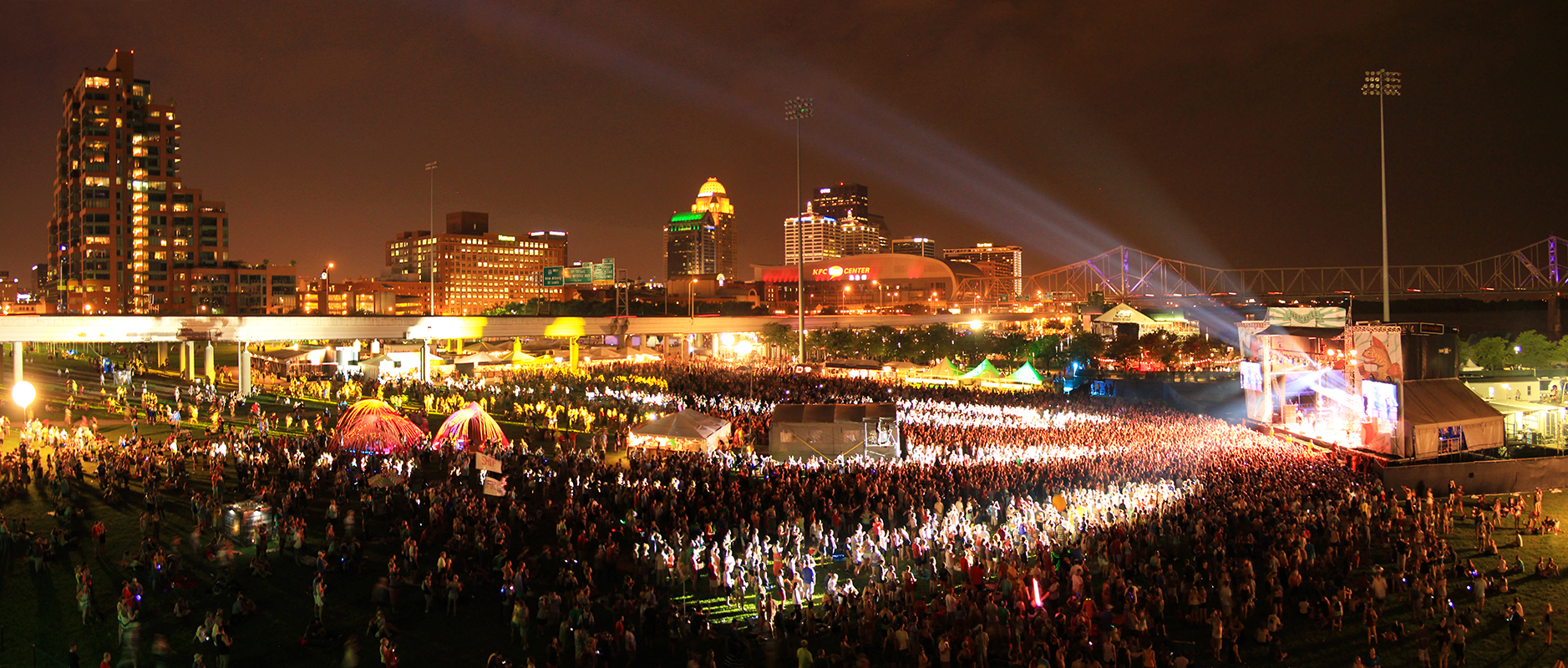
While Baller ATX has its roots planted in Austin, TX, there are events around the country that speak to the Austin spirit and vibe. One of these is Forecastle, which has rocked the gorgeous Waterfront Park in downtown Louisville, KY for almost 15 years, and will take place this Friday, July 15-Sunday, July 17. Your very own Baller ATX staff will be traveling to Kentucky this weekend and bringing you coverage on all things Forecastle!

Beginning as a small neighborhood event in 2002, focusing on music, art, and conservationism – Forecastle has grown into one of the largest music festivals in the country, and draws tens of thousands attendees from all over the world. This year’s headliners include The Avett Brothers, Alabama Shakes, Ryan Adams, and Death Cab for Cutie. Austin’s own Shakey Graves and Ghostland Observatory will also be lending their distinctively-Austin sounds to the musical magic filling Waterfront Park this weekend.

Featuring local eats, a Bourbon Lodge, and the Hunter S. Thompson-inspired Gonzo Bar, Forecastle’s unique style makes it a can’t-miss for festival lovers. We can’t wait to bring you stories and photos from the weekend, so stay tuned to Baller ATX for more!

Forecastle-2016-Logo

Denver Beer Dinner

Posted by terry flemings | Uncategorized

Denver Beer Dinner

by Stephen Kluchin

After a long day of tomfoolery, sightseeing, and partaking of the best Denver had to offer, we had the unique opportunity to attend a Beer Dinner — a collaboration between Dude’s Brews by Dad & Dude’s Breweria and the Dunbar Kitchen & Tap House — to enjoy some cuisine and CBD infused brews.

Wait! CBD infused beer?! Isn’t that illegal?! Or so you may be asking yourself. I was curious about the subject as well, as the legalization in Colorado was at the state level and alcohol is federally regulated. First off, CBD is a non-psychoactive hemp extract. Also, after some quick research it seems like the brewery already hashed this out with the proper authorities (http://www.breweria.com/events/hembree-likes-to-make-a-splash-photoarticle-courtesy-westwood/).

The restaurant was nice, but felt a bit trendy. The staff were very nice and made sure to share what knowledge they had of the beers they would be serving. We even had the chance to speak to the brewer.

Now on to the feast!

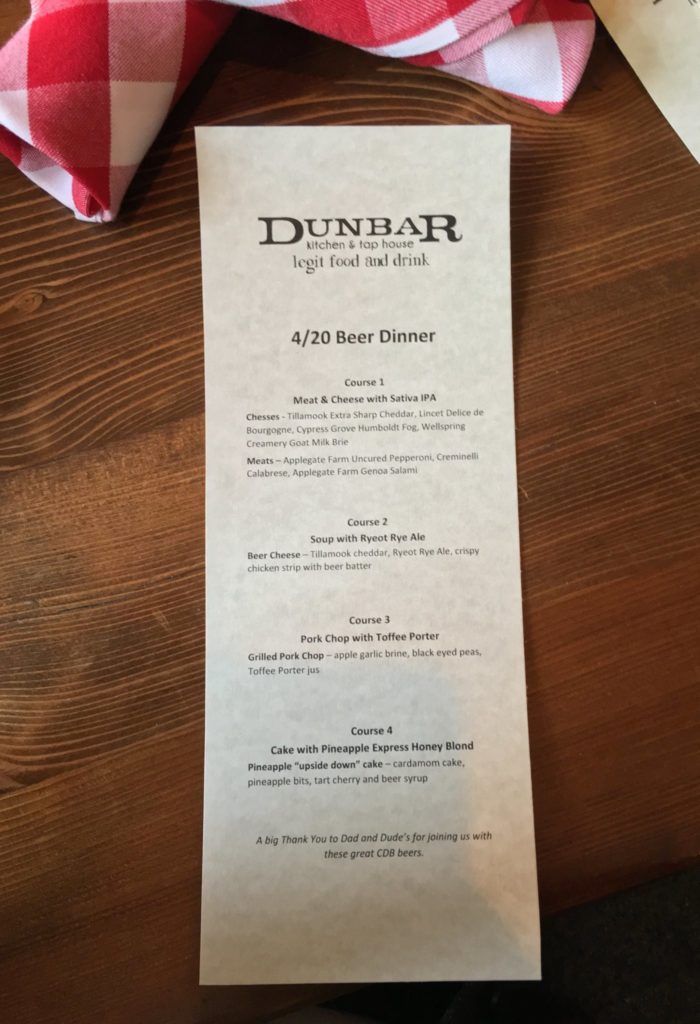
Menu

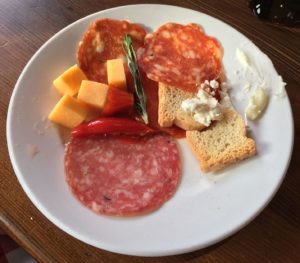
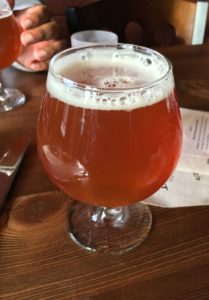
Course #1: Meat & Cheese with Sativa IPA

Meat and Cheese  IPA

Cheeses – Tillamook Extra Sharp Cheddar, Lincert Delice De Bourgogne, Cypress Grove Humboldt Fog, Wellspring Creamery Goat Brie

Meats – Applegate Farm Uncured Pepperoni, Crimenelli Calabrese, Applegate Farm Genoa Salami

I love charcuterie! However, this course was underwhelming, generic, and simple. The Sativa IPA was superb, smooth, and had a hoppiness that started strong and finished easy.


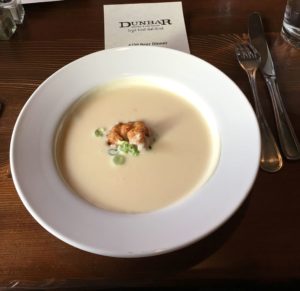
Course #2: Soup with Rye Ryeot Ale

Beer Cheese Soup Ale

Beer Cheese – Tilamook Cheddar, Red Rye Ale, Crispy Chicken Strips with Beer Batter

The beer cheese soup was very flavorful, but a little thin. The rye ale was a perfect contrast to the savory flavor of the soup. The chicken was tender and kept its crunch, but was tiny and served more as a garnish than a significant part of the dish.

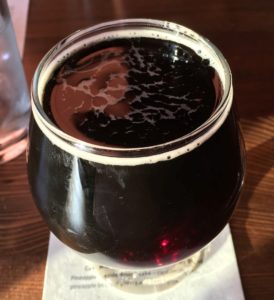
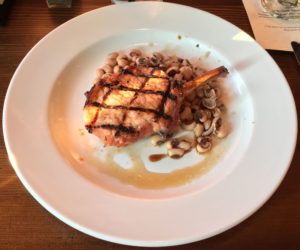
Course #3: Pork Chop with Toffee Porter

Porkchop

Grilled Pork Chop – Apple Garlic Brine, Black Eyed Peas, Toffee Porter Jus

The pork chop was tasty but a bit dry. The black eyed peas were on point and savory. The toffee porter was tasty, salty, and sweet with a bit of coffee flavor and a hint of caramel. It contrasted well with the meal.

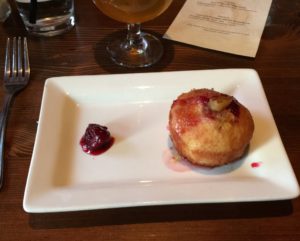
Course #4: Cake with Pineapple Express Honey Blonde

Cake

Pineapple “Upside Down” Cake – Cardamom Cake, Pineapple bits, Tart Cherry and Beer Syrup

The final course was the most anticipated one for me and it didn’t disappoint! The cake was light but not too sweet and paired exceptionally well with the tart cherry. The beer was light and fruity with a crisp finish.

The feast was worth the $40 price tag. Thanks for the awesome experience!

Please visit both Dude’s Brews by Dad & Dude’s Breweria and the Dunbar Kitchen & Tap House if you are ever in the Denver area.