Austin entered August 2021 with the feeling that the worst of the pandemic might finally be behind it. Restaurants were busy, bars were reopening more fully, live music was returning and Austinites were once again filling patios and making plans for nights out. After a year and a half of cancellations and restrictions, the summer had begun to resemble the Austin people remembered. Then the Delta variant arrived with a force that changed the mood almost overnight.

By the first week of August, Austin and Travis County had moved back into Stage 5 of the local COVID-19 risk guidelines as cases and hospitalizations surged. On August 7 and 8, the city activated its emergency alert system to warn residents about the rapidly worsening situation and the strain being placed on local hospitals. The fact that Austin used an emergency alert system normally associated with disasters demonstrated just how serious the situation had become.

For Austin’s bar and restaurant scene, the timing was brutal. Businesses had spent the spring and early summer rebuilding their operations around the assumption that the return of customers would continue. Restaurants were reopening dining rooms, bars were getting busy again and music venues were bringing performers back. Many owners had spent months waiting for exactly this moment. Suddenly, they were being forced to reconsider how much normal activity they could safely handle.

The result was one of the strangest months in Austin’s recent nightlife history. The city was technically open, but the atmosphere around going out had changed. Restaurants and bars were voluntarily reinstating policies that had disappeared only weeks earlier. Some required masks. Others reduced capacity. Some kept indoor dining closed. Several music venues and bars began encouraging customers to wear masks or changed their operating procedures in response to the surge. Eater Austin documented a long list of local businesses that reinstated pandemic precautions during August, including Hotel Vegas, Volstead, Justine’s, Kinda Tropical, Salt & Time, Fresa’s and numerous coffee shops and restaurants.

That was a remarkable reversal.

Only a few months earlier, Austin’s hospitality industry had been desperate to get people back through the doors. By August, some of those same businesses were voluntarily telling customers to slow down.

The conflict was especially visible in Austin’s music scene. Live music had finally started returning after being devastated by the pandemic, and musicians, venues and fans were eager to reclaim the experience that had made Austin famous. But the Delta surge created new uncertainty for touring artists and local performers. Across the live-music industry, tours were being reconsidered, venues were adding vaccination or testing requirements and outdoor performances were increasingly viewed as safer alternatives. The national touring industry was experiencing exactly the same tension Austin was facing: everyone wanted live music back, but nobody knew how long the reopening could safely continue.

For Austin, that meant the city’s famous nightlife identity was suddenly caught between two realities. The old Austin wanted packed clubs, crowded dance floors and late nights on East Sixth Street. The pandemic-era Austin had learned that those environments could become difficult to manage during a major COVID surge. Businesses had to make decisions that weren’t simply about money anymore. They were decisions about whether they could continue operating in a way that protected employees and customers while still keeping the doors open.

And then there was Austin Pride.

August was supposed to be the month when the city’s LGBTQ+ community finally got its major public celebration back. Austin Pride had originally postponed its 2020 celebration to August 2021 because organizers hoped the additional year would make a large festival and parade possible. The organization had described the postponement as a decision based on the health and safety of the community.

As August approached, however, the Delta surge created a new crisis.

The Pride celebration was no longer simply a question of whether Austin could hold a large event. It became a question of whether it was responsible to bring thousands of people together while hospitals were under increasing pressure. The uncertainty surrounding the event became a major part of Austin’s August conversation, with residents debating whether the parade should proceed while the city’s COVID situation deteriorated. Contemporary local discussion shows that organizers and participants were still trying to determine what would happen as late as the first week of August.

That uncertainty captured the mood of the entire city.

Austin had spent months planning a return to normal.

Now normal was changing again.

At the same time, however, the food scene continued moving forward. New restaurants weren’t suddenly disappearing from the calendar. In fact, August remained an active month for restaurant openings and announcements.

One of the most visible openings was Favorite Pizza, the new downtown late-night pizza concept from McGuire Moorman Lambert Hospitality. The restaurant opened in early August serving slices, whole pies, subs and frozen cocktails, bringing another late-night food option to downtown Austin.

That was particularly appropriate for the moment.

Austin had always had a special relationship with late-night food. Bars and music venues created demand for something to eat after midnight, and pizza was practically designed for that role. Favorite Pizza’s arrival therefore fit naturally into the downtown ecosystem just as nightlife was trying to recover.

But even that opening carried the strange tension of August 2021.

The restaurant industry was expanding while simultaneously preparing for another possible slowdown.

Businesses were opening new concepts while adding masks and safety protocols.

Customers were returning while wondering whether they should be going out.

Musicians were booking shows while worrying about whether those shows would happen.

Austin was moving forward and backward at the same time.

The month’s restaurant news also showed that entrepreneurs were still betting heavily on Austin’s future. Fareground, the city’s downtown food hall, was preparing to reopen with new concepts, including restaurants associated with Austin favorites such as Wu Chow and Austin Rotisserie.

Wanderlust Wine Company was also preparing a major Govalle location featuring an enormous number of self-service wine taps, another example of the continued investment in Austin’s bar and beverage culture.

And on South Congress, the highly anticipated Salty Donut was preparing for its Austin debut, bringing the Miami-born doughnut company to one of the city’s most recognizable food and shopping corridors.

Those developments mattered because they showed that Austin’s food scene had not lost its momentum.

The pandemic had changed how restaurants operated, but it hadn’t destroyed the city’s appetite for new food experiences.

People still wanted to discover restaurants.

They still wanted cocktails.

They still wanted late-night pizza.

They still wanted wine bars.

They still wanted doughnuts.

And entrepreneurs still believed Austin was a place where those businesses could succeed.

The problem was that nobody knew exactly what the next few months would look like.

That uncertainty became the defining characteristic of August.

The city’s hospitality industry was caught in a difficult position. If businesses closed or drastically reduced operations, they risked losing the customers they had spent months trying to win back. If they operated normally, they risked exposing employees and customers during a period when local hospitals were struggling.

There was no easy answer.

Individual businesses therefore began making their own decisions.

Some required masks.

Some limited indoor seating.

Some returned to takeout.

Some kept patios as their primary dining option.

Some changed policies several times as the situation evolved.

The result was a patchwork of Austin nightlife.

One bar might feel almost completely normal.

Another might have a mask requirement at the door.

A restaurant might have its dining room open.

Another might be patio-only.

A music venue might require proof of vaccination or testing.

The city’s nightlife scene no longer had one universal experience.

Every business was figuring out its own version of the new normal.

For customers, that meant checking social media and restaurant websites before going out became routine again.

The carefree summer that had seemed to be arriving in June and July suddenly required planning.

But August wasn’t simply a story about COVID.

It was also a story about Austin refusing to stop.

Restaurants kept opening.

Musicians kept performing.

Bars kept experimenting.

Food halls kept developing.

Businesses kept hiring.

And people kept going out.

That resilience was one of the most important characteristics of Austin’s summer.

The city had already survived the cancellation of SXSW, a year of pandemic restrictions and the February winter storm. Now it was facing another COVID surge.

Yet the creative economy continued moving.

The food scene continued evolving.

The music community continued finding ways to perform.

The bar scene continued adapting.

Austin wasn’t willing to completely shut down its personality again.

Instead, it tried to find a compromise.

Outdoor music.

Patios.

Smaller gatherings.

Masks.

Vaccinations.

Testing.

Takeout.

Flexible policies.

The goal was no longer simply to return to the Austin of 2019.

It was to create an Austin that could function during an unpredictable pandemic.

That was what made August 2021 such a fascinating month in the city’s history.

It was the month when the comeback met reality.

Austin had proven that its restaurants, bars and music scene could survive the first year of COVID-19.

Now they had to prove that they could survive the next phase.

The Delta variant didn’t erase the comeback.

But it changed the terms.

The city had learned how to reopen.

Now it had to learn how to stay open.

And as August came to a close, Austin’s food, music and nightlife communities were once again waiting to see what September would bring.


After more than a year of COVID restrictions, closures and uncertainty, the city’s restaurant scene finally looked like it was moving forward.

New restaurants were opening.

Patios were filling.

People were going out.

And Austin’s food industry was starting to look toward the future instead of simply trying to survive the week.

The recovery wasn’t perfect.

Many restaurants were still dealing with staffing problems, increased costs and pandemic-related restrictions.

But the direction had changed.

For the first time in a long time, the big question wasn’t simply, “Will this restaurant survive?”

It was becoming:

“What’s opening next?”

That shift mattered.

Austin has always attracted ambitious chefs and restaurant entrepreneurs.

The pandemic temporarily put many projects on hold.

By spring 2021, some of those projects were moving forward again.

The restaurant industry was also taking advantage of everything it had learned during the pandemic.

Outdoor seating remained important.

Online ordering remained important.

Takeout remained important.

Restaurants had discovered that customers liked flexibility.

They didn’t necessarily need the old model back exactly as it was.

They wanted choices.

That was especially true in Austin.

The city had always been comfortable with unconventional dining.

Food trucks.

Pop-ups.

Patio restaurants.

Beer gardens.

Drive-through concepts.

Ghost kitchens.

The pandemic accelerated that creativity.

By May, Austin’s food scene was becoming a mixture of old and new.

Some longtime restaurants were returning to normal.

New concepts were launching with pandemic-era lessons built into their business plans.

And customers were ready.

People had spent months eating at home.

They were ready for tacos with friends.

They were ready for burgers.

They were ready for margaritas.

They were ready to sit on patios and complain about the heat.

In other words, they were ready to be Austin again.

The restaurant comeback wasn’t finished.

There would be more closures.

More openings.

More changes.

But May 2021 was when the recovery started to feel real.

Austin’s food scene had survived one of the most difficult periods in its history.

Now it was ready to start having fun again.

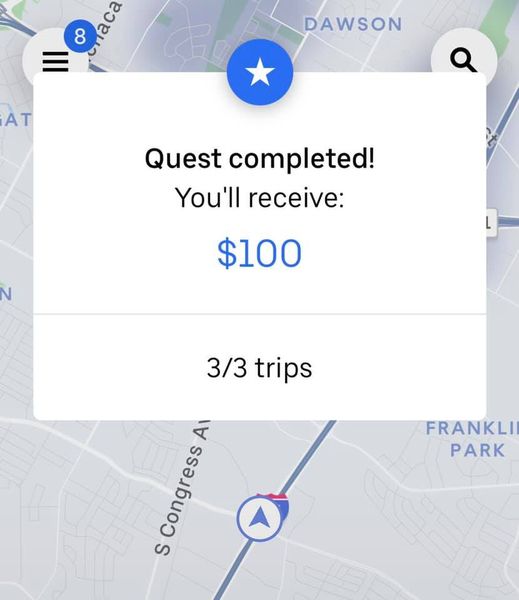
Those looking for extra summer money, I did only 3 trips today on Uber as a driver in 30 mins and made $100 extra. They are in need of drivers in Austin! Other have told me once they are signed up using links below they are seeing the $100 promo as well!


From (cut/paste) Uber promos (new drivers promo first, then below that one existing drivers who haven’t taken a trip since March 20, 2021


New drivers: I just invited you to drive with Uber. Sign up and earn $1,180, guaranteed, after completing your first 100 trips. See how. https://partners.uber.com/i/u5q5msa2j

Existing drivers link who havnt taken a trip since 3/20/21: Hi, I’ve been driving and earnings on Uber are high! Median earnings in Austin are $33/hour*.
Make at least $1,575 guaranteed by taking 115 trips with my referral link**. Go to http://hero.uber.com/2ft?p=769zq to accept my invite.
And in case you didn’t know – Uber has introduced new policies and features to help keep everyone safe, including a mandatory mask policy and free disinfectant supplies for drivers.
*Stated trip earnings of $33/hour are based on median earnings of drivers in Austin from 3/29/2021 to 4/12/2021 date who drove approximately 20 hours per week. Actual earnings vary, depending on factors like number of trips provided, time of day, and location. Earnings include trip fares, some promotional offers (including Quest and Consecutive Trips), and tips, which are provided at the discretion of the rider. Median earnings in your specific location may be lower than the city figure. Since median is the middle, you may make more or less than the median amount.
**Your guaranteed amount and requirements may vary if you are signed up as a delivery person or driver, and if you drive in a different city from your referrer. See the referral link for offer details.

By this month something was beginning to change.

It wasn’t completely back.

But Austin was starting to feel like Austin again.

Restaurants were reopening.

Patios were becoming busy.

People were spending more time outside.

And after more than a year of restrictions, there was finally a sense that the city might be moving toward something resembling normal.

The restaurant industry had spent the previous year learning how to survive.

Now it had to learn how to recover.

That meant hiring.

Rebuilding menus.

Bringing employees back.

Figuring out indoor capacity.

And preparing for customers who were suddenly much more interested in going out.

The changes created a strange situation.

Restaurants were desperate for business.

But many were also struggling with staffing and supply problems.

Some businesses had closed permanently.

Others had reduced their hours.

And some were operating with entirely different models than they had used before COVID.

The patio became one of Austin’s most valuable pieces of real estate.

Outdoor dining had existed long before the pandemic, but COVID turned patios into essential infrastructure.

Restaurants that could seat people outside suddenly had a major advantage.

Customers were also becoming more comfortable with takeout.

A year earlier, ordering restaurant food for pickup had felt like an occasional convenience.

By April 2021, it was routine.

Austin’s food culture had developed a new hybrid model.

Some people wanted to sit outside.

Some wanted to eat inside.

Others wanted to pick up dinner and go home.

Restaurants had to serve all three.

The city’s recovery wasn’t evenly distributed.

Businesses connected to tourism and nightlife were still dealing with major challenges.

But the signs of recovery were becoming impossible to miss.

Austin had made it through the worst months of the pandemic without losing its appetite.

And that appetite was coming back.

April was the month when many Austinites began thinking about summer.

Maybe there would be live music.

Maybe festivals would return.

Maybe restaurants would finally get busy again.

Maybe the city would once again feel crowded.

After everything that had happened, those possibilities felt exciting.

Austin wasn’t back yet.

But it was getting there.

Fuckkkkk.

Austin has hot summers.

Austin has thunderstorms.

Austin has the occasional cold front.

What Austin isn’t supposed to have is a week where the entire city seems to stop working because of ice and snow.

Then February 2021 happened.

Winter Storm Uri turned Austin into a city that many residents barely recognized.

Roads became dangerous.

Power disappeared.

Water systems failed.

Businesses closed.

Restaurants that had already spent almost a year fighting COVID suddenly faced another disaster.

For Austin’s food scene, it was a brutal combination.

Restaurants were already operating under difficult circumstances.

Then the freeze arrived.

Food supplies became difficult to obtain.

Employees couldn’t necessarily get to work.

Customers couldn’t necessarily leave home.

Power outages affected refrigeration and cooking.

And many restaurants that had managed to survive the pandemic suddenly had another enormous problem.

The storm also changed the way Austinites thought about basic necessities.

Food wasn’t simply something to enjoy.

It became something communities had to organize around.

Restaurants, food trucks, volunteers and neighborhood groups helped provide meals where possible.

The same city that had spent months finding creative ways to survive COVID was suddenly trying to feed people during a historic winter disaster.

The February freeze was also a reminder of how dependent Austin had become on infrastructure that residents normally took for granted.

A restaurant can have a great chef and a great menu.

But if the electricity is out, the water isn’t working and employees can’t reach the building, none of that matters.

For Austin’s hospitality industry, the freeze created losses on top of losses.

Food spoiled.

Events were canceled.

Business stopped.

Repairs were required.

And employees who were already dealing with pandemic uncertainty were suddenly dealing with frozen pipes, damaged homes and power outages.

The storm didn’t last forever.

But its effects did.

Austin’s restaurant industry entered the rest of 2021 carrying the financial damage of both COVID and the winter disaster.

Yet February also showed something important about Austin.

People helped each other.

Restaurants helped where they could.

Neighbors shared food.

Community organizations stepped in.

And once the roads cleared and the lights came back on, Austin began rebuilding again.

For anyone who lived through that week, February 2021 remains one of those months that doesn’t really need an explanation.

You remember it.

You remember the cold.

You remember the outages.

You remember trying to find food.

And you remember how strange it was to see Austin covered in ice.

For the restaurant industry, it was another chapter in a year that seemed determined to throw everything at them.

But somehow, Austin’s food scene kept going.

December is normally one of the busiest months of the year for Austin restaurants and bars.

Holiday parties.

Office gatherings.

Christmas dinners.

New Year’s Eve celebrations.

Restaurants packed with people.

Bars packed even more.

December 2020 was nothing like that.

Instead, Austin entered the holidays with restaurants and bars trying to survive another round of COVID restrictions.

By the end of the month, Austin bars and restaurants faced new nighttime restrictions. Beginning New Year’s Eve, businesses were required to stop on-site service at 10:30 p.m., with the restrictions continuing into the first days of January.

For a city famous for late-night food and drinks, that was a major change.

But Austin’s restaurants had already become remarkably creative.

Takeout holiday meals became increasingly important.

Restaurants that normally depended on dining-room traffic were creating family-sized packages and special holiday menus.

Instead of making reservations for Christmas dinner, customers could pick up a meal and celebrate at home.

That wasn’t necessarily what anybody wanted.

But it was what 2020 required.

Restaurants were also continuing to open new concepts.

P. Terry’s expanded outside Austin with its first New Braunfels location in December, while other businesses experimented with ghost kitchens and delivery-focused concepts.

Even in one of the worst years imaginable for the hospitality industry, Austin’s food culture continued expanding.

That might be the most surprising part of looking back at December 2020.

Businesses were still taking risks.

Chefs were still creating menus.

Restaurants were still opening.

And customers were still looking for something that felt normal.

The holiday season also emphasized the importance of Austin’s local restaurant community.

The pandemic had made it obvious that a restaurant wasn’t simply a building where food was served.

It supported cooks.

Servers.

Bartenders.

Delivery drivers.

Suppliers.

Farmers.

Musicians.

Event workers.

And countless other people.

When restaurants struggled, the impact spread throughout the city.

Austin customers responded by ordering takeout, purchasing gift cards, buying merchandise and supporting restaurants whenever they could.

December therefore became a month of both uncertainty and loyalty.

People couldn’t celebrate the holidays the way they normally did.

But they could still order barbecue.

They could still pick up tacos.

They could still grab cocktails where permitted.

They could still support their favorite neighborhood restaurant.

And they could still tip the people working through one of the strangest holiday seasons in memory.

As New Year’s Eve approached, Austin looked toward 2021 without really knowing what was coming.

The vaccines were beginning to offer hope.

But the pandemic was still very much present.

The city wasn’t back.

The restaurants weren’t back.

The bars certainly weren’t back.

But Austin’s food scene had survived four extremely difficult seasons.

That was something.

December 2020 wasn’t the end of the pandemic.

It wasn’t the beginning of the recovery.

It was the strange middle ground between the two.

Austin had learned how to live differently.

And the lessons of 2020 would influence the city’s restaurants for years to come.

Happy holidays. Be safe yo.

By November 2020, Austin restaurants had learned something they probably never expected to learn:

How to operate during a pandemic.

That didn’t mean things were easy.

Far from it.

But after months of restrictions, closures, takeout-only periods and constantly changing rules, Austin’s restaurants were becoming experts at adapting.

One of the clearest examples was La Barbecue.

The legendary East Austin barbecue restaurant had built its reputation around long lines, limited availability and an almost ritualistic barbecue experience.

COVID-19 changed that.

Instead of relying on the traditional long-line model, La Barbecue adapted its ordering system and made barbecue more accessible through preorders and other changes.

It was another example of how the pandemic forced Austin businesses to rethink things that had previously been considered part of their identity.

November also brought new food concepts.

Bom Bakeshop entered Austin’s food scene with mochi doughnuts, giving the city a new take on the increasingly popular chewy, gluten-free treat.

A new wine tasting room from C.L. Butaud and Wine for the People was also preparing to open, focusing on Texas-grown and Texas-produced wine.

That was an important reminder that Austin’s food culture wasn’t simply about surviving.

People were still creating.

They were still opening businesses.

They were still experimenting.

Even during a year when opening a restaurant might have seemed completely insane.

November also brought a new kind of restaurant concept: ghost kitchens.

Krispy Rice Sushi arrived as a delivery-focused option, offering sushi items built around crispy rice.

Ghost kitchens became increasingly important during the pandemic because they didn’t depend on traditional dining rooms.

For customers, the experience was simple:

Open the app.

Order food.

Wait for the delivery.

Eat at home.

For restaurants, the model offered another way to reach customers without relying entirely on a physical dining room.

And that was becoming increasingly important as COVID cases continued to rise.

Thanksgiving presented another challenge.

Normally, Austin restaurants would be preparing for large family gatherings, holiday parties and busy dining rooms.

In 2020, many restaurants were instead offering takeout meals, family packages and holiday specials.

The traditional Thanksgiving dinner was becoming something people could pick up and eat at home.

Austin’s food culture had always been heavily connected to social experiences.

The pandemic forced those experiences into people’s living rooms.

Even the way people discovered restaurants changed.

Instead of hearing about a new restaurant because friends had eaten there or because they walked past it downtown, people were finding restaurants through delivery apps, social media and online ordering.

November also demonstrated how vulnerable Austin’s nightlife remained.

The city had a huge population of restaurants and bars that depended on people coming downtown, attending events and staying out late.

Those customers weren’t coming back in the same numbers.

For some businesses, that was an inconvenience.

For others, it was an existential threat.

Yet the restaurant industry continued to demonstrate remarkable creativity.

Barbecue restaurants developed preorder systems.

Restaurants created family meals.

New delivery-only concepts appeared.

Restaurants developed outdoor dining.

Businesses created new holiday packages.

And Austin customers increasingly learned that supporting a restaurant could mean something as simple as ordering dinner.

Looking back, November 2020 was less about a particular restaurant opening or one huge event.

It was about adaptation.

The Austin restaurant industry was learning how to survive under conditions nobody had planned for.

And while many businesses wouldn’t make it through the pandemic, the ones that did helped shape the restaurant culture Austin would have after COVID.

The city was changing.

But the appetite wasn’t going anywhere.

South Congress has never been short on restaurants, but in November 2020, Austin’s most recognizable dining and shopping corridor got a new destination that represented something bigger than another restaurant opening.

Summer House at Music Lane officially opened its doors on November 6, bringing a new restaurant and hotel development to the rapidly changing South Congress neighborhood.

The timing could hardly have been stranger.

Austin’s restaurant industry was still trying to survive the COVID-19 pandemic. Restaurants were operating with restrictions, tourism remained far below normal and the city’s entertainment industry had been devastated by the disappearance of large events.

And yet, a major new development was opening on one of Austin’s most valuable pieces of real estate.

Summer House was part of the Music Lane development near South Congress Avenue and was connected to the new Hotel Magdalena. The project was designed to combine dining, hospitality and outdoor space in an area that had already become one of the city’s busiest destinations.

For South Congress, the opening was another sign that the neighborhood was continuing to evolve.

The street had long been famous for its combination of restaurants, music venues, independent shops and Austin landmarks.

But by 2020, South Congress was increasingly becoming a destination for larger developments and upscale hospitality concepts.

Music Lane represented that transition.

The restaurant itself was designed around a casual California-inspired menu, with dishes intended for sharing and a strong emphasis on seasonal ingredients.

There was also a substantial outdoor component.

That detail was particularly important in November 2020.

Outdoor dining had become one of the most important tools available to Austin restaurants trying to operate during the pandemic. Customers were increasingly looking for patios and open-air spaces where they could eat and socialize.

Summer House was therefore opening at a moment when its design happened to fit one of the biggest changes happening in the restaurant industry.

The restaurant wasn’t simply selling food.

It was selling an experience built around an open, comfortable environment.

That was becoming increasingly valuable.

The opening also highlighted the strange divide developing in Austin during the pandemic.

On one side were the restaurants and bars that had spent months fighting for survival.

On the other were major developments that had been planned years earlier and were finally coming online.

Construction doesn’t stop easily.

Hotels don’t simply pause halfway through development.

Real estate projects often have years-long timelines.

By the time Music Lane opened, much of the project had been planned long before anyone had heard of COVID-19.

The result was an unusual sight: a major new hospitality destination opening in a city where much of the hospitality industry was struggling.

For South Congress, however, the opening made sense.

The corridor had already developed into one of Austin’s most popular areas for visitors.

Tourists came to photograph the famous “I love you so much” mural.

People visited Allen’s Boots and the other longtime shops.

Restaurants and bars lined the street.

Hotel development was increasing.

And the area had become one of the places where Austin’s old identity and new identity collided.

Summer House fit directly into that transition.

It wasn’t an old-school Austin diner.

It wasn’t a dive bar.

It wasn’t a food trailer.

Instead, it represented the newer hospitality industry that had been developing around South Congress.

That made its November opening worth watching.

The restaurant also had the advantage of being part of a larger destination.

Hotel guests could walk to dinner.

Visitors could spend an afternoon around South Congress.

Locals could use the restaurant as another option along one of Austin’s busiest streets.

And the development could benefit from the enormous amount of foot traffic already generated by the neighborhood.

But the pandemic changed the equation.

Normally, a new restaurant opening in South Congress would have generated enormous crowds.

Opening-weekend excitement would have brought customers through the doors.

Tourists would have filled the hotel.

Events and gatherings would have created additional business.

November 2020 wasn’t normal.

Restaurants couldn’t simply depend on the traditional opening-week formula.

They had to build their customer base more slowly.

They had to accommodate customers who were concerned about indoor dining.

And they had to navigate a hospitality economy that was still under tremendous pressure.

Still, the opening mattered.

Austin needed good news.

After months of restaurant closures, canceled festivals and disappearing live music, seeing a new restaurant open felt almost symbolic.

It showed that Austin’s food scene hadn’t completely stopped.

People were still investing in restaurants.

Chefs were still creating menus.

Developers were still building hospitality destinations.

And customers were still willing to discover something new.

Summer House was also part of a much larger transformation taking place on South Congress.

The neighborhood was becoming increasingly polished.

That brought new money and new businesses.

It also created questions about what the future of South Congress would look like.

Could the neighborhood maintain the personality that had made it famous while accommodating increasingly upscale development?

Would longtime independent businesses remain?

Would visitors continue coming for the quirky Austin experience, or would South Congress eventually become another luxury shopping and hospitality district?

Those questions weren’t answered in November 2020.

But the opening of Summer House was another piece of the puzzle.

It showed where Austin’s hospitality industry was heading.

And it showed that the city’s growth wasn’t stopping simply because the pandemic had temporarily changed everyday life.

In fact, the opening was almost a snapshot of Austin’s future arriving in the middle of an unprecedented crisis.

The old Austin was still visible all around South Congress.

The boots.

The murals.

The music.

The independent shops.

The tacos.

But the new Austin was there too.

Hotels.

Luxury development.

Upscale restaurants.

New residential projects.

And an increasingly sophisticated hospitality industry.

Summer House opened right in the middle of that tension.

For the restaurant itself, the challenge was straightforward: survive the strangest opening period imaginable and wait for Austin’s hospitality economy to recover.

For South Congress, the opening represented something larger.

The neighborhood was changing again.

And despite everything happening in 2020, Austin’s appetite for new restaurants hadn’t disappeared.

If anything, the opening of Summer House demonstrated that the city was already preparing for whatever came next.

The pandemic had changed Austin.

But it hadn’t stopped Austin from building.

And on November 6, 2020, a new restaurant opened on South Congress to prove it.

free stuff if you early vote in Austin:

Independence Brewing Co. – It’s officially EARLY VOTING TIME in Texas! Come to the brewery during our weekend taproom hours, show us your voting sticker and get a Freak Power on us! Power to the freaks, y’all — Now get out there and vote already! #vote #earlyvoting #freakpower

St Elmo Brewing Company – Hey there, early voters! Swing by the brewery today and get yourself a FREE half-pint of beer! Just flash us your “I Voted” sticker and the beer is all yours! 🙌🏼🇺🇸🍻 #election2020

Still Austin Whiskey Co. – Free draft cocktail w/ “I Voted” Sticker!

Austin Eastciders Barton Springs – Through October 13-16 wear your “I Voted” sticker at the Barton Springs Location to receive a free pint free pint of cider. There is a limit to one pint per guest.

4th Tap Brewing Co-op – is giving people with a sticker a free 10 oz pour through Friday, October 16th.

Texas Saké Co – Bring in your “I Voted” sticker and receive a 1.5oz shot with any purchase between October 15th – 18th! Let’s Go Texas #vote2020#txsakeco

Easy Tiger – Swing by any Easy Tiger location for a free cookie when you present your ‘I Voted!’ sticker! Must be present to redeem offer, does not apply to Curbside or Delivery. Valid until Tuesday, November 3

Galaxy Cafe – Bring in your “I Voted sticker to any of the three locations of Galaxy Cafe (Central, Northwest, or South) anytime during early voting and they’ll give you a free small chips and queso (dine-in only).

Seoulju Korean Kitchen & Bar – The Korean spot Seoulju is giving away five free dumplings when you show them your “I Voted” sticker at their North Lamar location this week, from October 15th-18th.

Marcelino’s – Bring your “I Voted” sticker to the East Austin taqueria Marcelino’s, and they’ll give you a free breakfast taco.

El Mesón – From Oct. 13 to 15, stop by the Mexican restaurant between 4 and 8 p.m. for a free marg. (Just make sure to be wearing your “I Voted” sticker.)

Paprika ATX – Cast your ballot then get a free carnitas taco. Sounds like a win win to us.

El Chilito – Between October 13-30, show your “I Voted” sticker to receive a free regular-sized queso. If you vote by mail, you can use the promo code Queso2020 to receive your free queso on an online order.

Home Slice Pizza – From October 13 – November 3. both Home Slice Pizza locations will offer a free slice of pizza to any guest who shows up to its slice windows wearing an “I Voted” sticker.

The Soup Peddler – Show your “I Voted” sticker to receive a free 8 oz. soup. Valid at all locations.

Launderette Austin will give guests with an “I Voted” sticker a free draft beer during lunch on the next three Fridays (the 16th, 23rd, and 30th).

And lastly and bestly, from Jackie Venson:
“It’s early voting time! If you’re waiting in line to #vote in Texas, DM this (her fb not ours) page and I’ll send you my new, unreleased record, Vintage Machine, to listen to while you wait FOR FREE. I am the record label, I can do these things lol.”

Photo of Jackie by: Ismael Quintanilla III Photography

This year Amazon decided to up the madness by not having just one or two activations but three all in one giant area. I was invited to a special press preview on Wednesday to see the madness first hand and without all the lines. The installations for this year consisted of The Expanse, returning for another season, and two brand new shows, The Boys and Carnival Row. Upon entering you are greeted by the extra friendly staff who give out tokens that could be used for a variety of snacks, such as kettle corn, fruit cups, pretzel bites, and my favorite Churros.

And an extra special treat for the media folks was the free Carls Jr burgers and fries. I was in heaven and even tried the new beyond burger because let’s face it at Comicon this would be my only healthy meal.

The first Activation was based on their hit show the Expanse. We were loaded into what looks like a spacecraft after a briefing from our commanders we exited and were transported to an alien world as un peacekeepers to find out what’s going on with the “belters” who were accused of attacking settlers. After some conversations with prisoners, we heard loud inhuman noise and quickly had to leave. Once over we received this lovely show branded mugs. After that, I went to The Boys installation. A brand new show coming out this week based on the Comic book by the same name (top comic in my list). We went inside to a full setup electronic store where a car had crashed through. We were briefed that we were to help the boys hide the crime of defeating a superhero. Once over we got a nice branded pin.

Unfortunately, I was not able to complete carnival Row due to prior engagements but I hear it was the best one. Smack dab in the middle of the area was the large glass pyramid structure where we were treated to special acts based on the three shows. If the shows are even half as good as the activation Amazon prime will be a force to reckon with when it comes to streaming televison.

Photos by Terry Flemings